
Finding out your child has a cavity can feel like a lot to process, but a filling is one of the most routine treatments in pediatric dentistry. It is completely normal to have questions: What will the appointment look like? Will my child be comfortable? What material will be used? Taking time to learn the basics can ease any worry before the visit and helps set the stage for a positive experience your child will carry with them.
At Main Street Pediatric Dentistry of Belmont, Dr. Matthew Savage brings a prevention-focused approach to every appointment, including regular exams that catch cavities early and gentle restorative care when a filling becomes necessary. As a board-certified pediatric dentist with 20 years of experience, he knows that a child’s experience at the dentist today shapes how they approach their health for years to come. When a filling is the right next step, our goal is to make it as smooth and comfortable as possible for your child.
What Is a Dental Filling?
A dental filling is used to restore a tooth that has been affected by decay. Treating a cavity promptly keeps it from affecting the inner layers of the tooth and helps preserve as much healthy structure as possible. Dr. Savage removes the damaged portion of the tooth and fills it with a restorative material to bring the tooth back to its normal function and shape.
Even baby teeth can benefit from fillings. Primary teeth hold space for incoming permanent teeth, and keeping them healthy supports your child’s ability to chew, speak, and smile with confidence. Some baby teeth do not exfoliate until about twelve years of age. Having routine dental cleanings and exams allows Dr. Savage to catch cavities early, before they require more involved treatment.
Filling Materials Used in Pediatric Dentistry
Knowing what goes into a filling can help you feel more informed going into your child’s appointment. Different materials serve different purposes, and the right choice depends on factors like the location of the tooth, the size of the cavity, and your child’s individual needs.
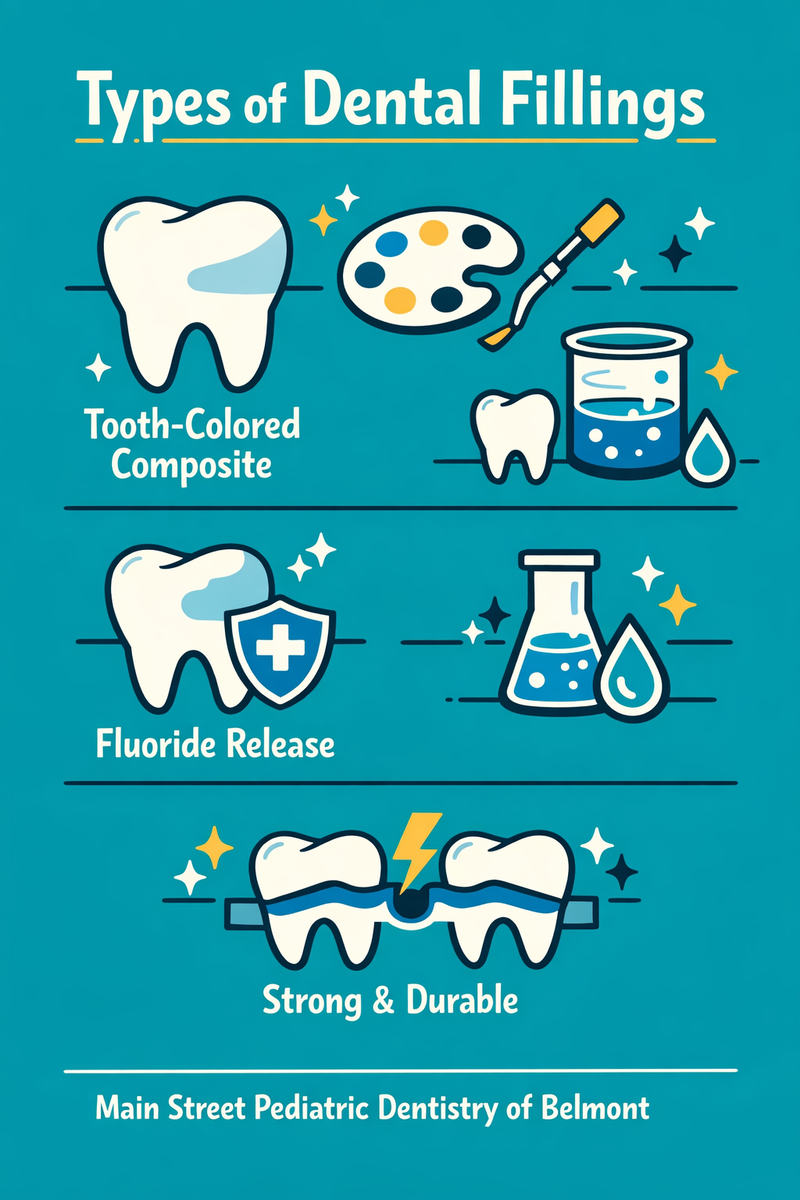
According to the American Academy of Pediatric Dentistry’s best practices on restorative dentistry, several filling materials are appropriate for use in pediatric patients, each with distinct clinical advantages. The most commonly used restorative material options include the following:
- Composite resin: A tooth-colored material that bonds directly to the tooth structure, making it a popular choice for visible teeth. It requires less removal of healthy tooth structure and blends naturally with the surrounding enamel.
- Glass ionomer cement: A tooth-colored material that releases fluoride over time and adheres well to tooth structure. It is often used in situations where moisture control is more challenging or as an interim option for younger children.
- Resin-modified glass ionomer: A hybrid that combines the fluoride-releasing benefits of glass ionomer with some of the strength properties of resin. It is a good fit for primary teeth in certain clinical situations.
Each of these materials is evaluated based on your child’s tooth anatomy, age, and the overall condition of the tooth.
What to Expect During the Appointment
Going into your child’s appointment, it can be helpful to have an idea of what to expect.
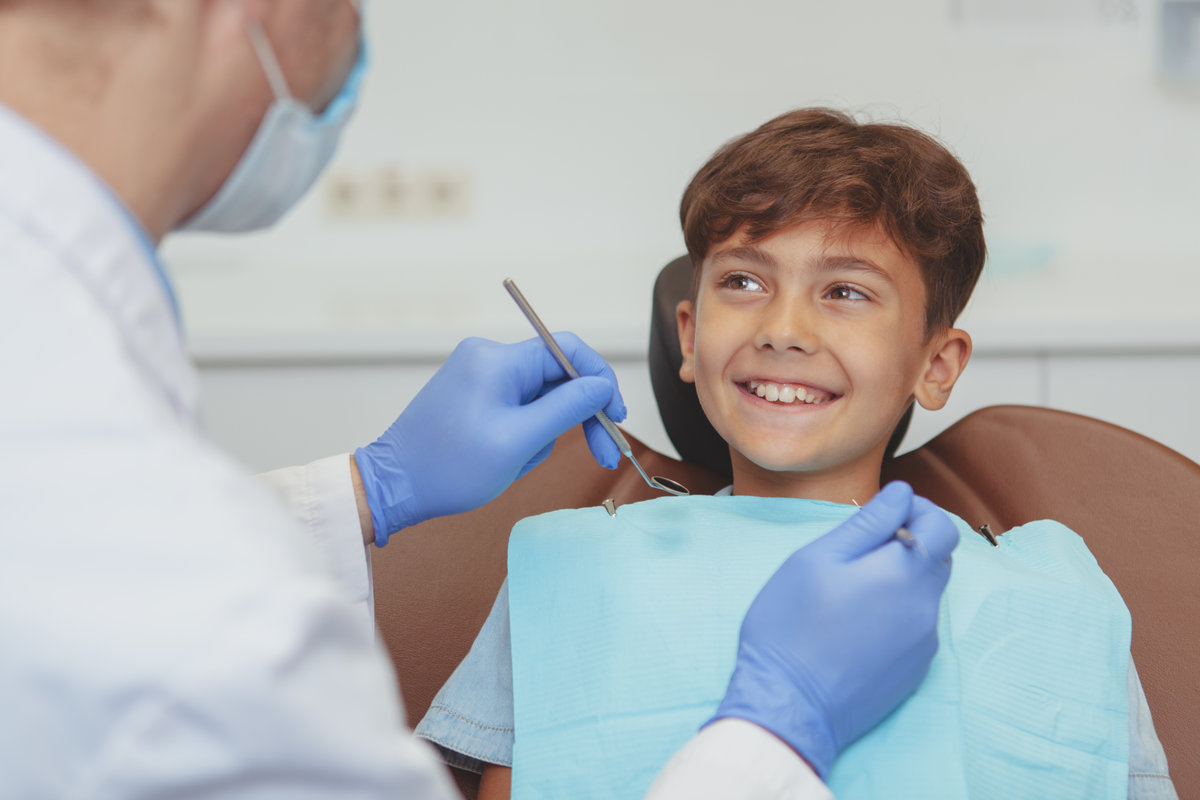
Before the procedure: Your child’s appointment will start with a thorough review of the affected tooth, often using digital X-rays to assess the depth of the cavity. If the filling requires local anesthesia, Dr. Matthew Savage will apply a topical numbing agent first to minimize any sensation before the injection. For children who experience dental anxiety or who need additional support, nitrous oxide and sedation dentistry are also available to help them feel calm and at ease throughout the visit.
During the procedure: Once the area is numb, the decayed portion of the tooth is gently removed and the space is cleaned and prepped. The chosen filling material is then placed and shaped to match the natural contours of the tooth. Depending on the material used, a special blue curing light may be used to harden the filling in place.
After the procedure: Most children return to their normal routine shortly after the appointment. Some mild sensitivity in the treated area is normal and typically fades within a few days. Our team will walk you through any post-appointment care instructions before you leave, so you know exactly what to expect at home.
Supporting a Healthy Smile Going Forward
A filling treats the current issue, but protecting your child’s smile going forward is just as important. Building strong habits at home, along with consistent professional care, significantly reduces the risk of new cavities developing. Our guide to cavity prevention in kids is a great resource for families looking to support their child’s oral health between visits.
For teeth that have experienced more significant decay, a white crown or a stainless steel crown may be a better long-term solution than a filling alone. Dr. Matthew Savage will always recommend the most conservative option that effectively restores the tooth and protects your child’s smile.
Will my child feel pain during a filling?
Most children feel little to no discomfort during a filling. Dr. Savage applies a topical numbing gel before any local anesthetic injection, which significantly reduces any sensation from the needle. Once the area is numb, the procedure itself is typically painless. For children with anxiety or more complex needs, nitrous oxide and sedation options are available to make the appointment as comfortable as possible.
How long does a filling appointment typically take for a child?
A simple filling appointment usually takes between 30 and 60 minutes, depending on the size of the cavity and the tooth being treated. Multiple cavities may be addressed in the same appointment or spread across visits, depending on your child’s comfort level and the extent of treatment needed. Dr. Savage will outline what to expect at your child’s specific appointment so you can plan accordingly.
Is it worth filling a cavity in a baby tooth that will fall out anyway?
Yes, in most cases. Untreated cavities in primary teeth can spread, lead to pain, cause infection, and damage the permanent tooth developing beneath the gum line. Baby molars in particular stay in place until ages 10 to 12, so leaving a cavity untreated can cause years of problems. Filling a cavity early is almost always simpler, less costly, and more comfortable for your child than waiting until the decay progresses.
How can I prevent my child from getting more cavities after a filling?
Consistent brushing twice daily with fluoride toothpaste, flossing once the teeth are touching, and limiting sugary snacks and drinks between meals are the most effective steps. Regular dental visits allow Dr. Savage to apply fluoride treatments and sealants that provide additional protection for teeth at higher risk. Addressing any areas of concern early prevents small problems from requiring more significant treatment later.
Schedule a Visit at Main Street Pediatric Dentistry of Belmont
When your child needs a filling, you want someone who will take the time to make the experience as comfortable and stress-free as possible. Dr. Matthew Savage is a board-certified pediatric dentist and the sole provider at our practice, which means your child sees the same trusted face every single visit. That kind of consistency builds comfort, and comfort builds a foundation for lifelong healthy dental habits.
Main Street Pediatric Dentistry of Belmont is a locally owned practice in downtown Belmont, NC, dedicated exclusively to children’s dental care. If your child has a cavity or you’d just like to get ahead of any concerns, we’d love to see them. Contact us today to schedule an appointment.